ChatGPT Overview (2026 Helpful Guide): Features, Benefits, Use Cases & Complete Guide
ChatGPTApr 09, 2023

In this article, we’ll explore a complete ChatGPT Overview—covering what it is, how it works, its latest features, advantages, disadvantages, and real-world use cases.
Table of Contents
The world of artificial intelligence is evolving at an incredible pace, and tools like ChatGPT are at the forefront of this transformation. Since its initial release, ChatGPT has rapidly evolved from a simple conversational chatbot into a powerful AI assistant used by developers, businesses, students, and creators worldwide.
Built by OpenAI, ChatGPT now leverages advanced models like GPT-4 and beyond, offering multimodal capabilities, improved reasoning, and highly accurate responses.
Let’s dive deep into everything you need to know about ChatGPT in 2026.
What is ChatGPT
ChatGPT is a sibling model to InstructGPT, which is trained to follow instructions in a prompt and provide a detailed response. It uses natural language processing and machine learning to understand and respond to user inputs in a human-like way. ChatGPT is trained on massive amounts of data and can generate responses that are tailored to the context of a conversation.
It has the ability to learn and improve over time, making it an effective tool for businesses looking to improve customer service and engagement. ChatGPT can be used in a variety of industries, including healthcare, finance, and education, and has the potential to transform the way we interact with technology.
ChatGPT is an AI language model that was trained on a large body of text from a variety of sources (e.g., Wikipedia, books, news articles, and scientific journals). The dataset only went up to 2021, meaning that it lacks information on more recent events.
Evolution of ChatGPT (2020 → 2026)
ChatGPT has gone through major improvements over the years:
| Year | Model | Key Features |
|---|---|---|
| 2020 | GPT-3 | Strong language generation |
| 2022 | GPT-3.5 | Chat-focused improvements |
| 2023 | GPT-4 | Better reasoning, coding, accuracy |
| 2024–2026 | GPT-4.5 / GPT-5 | Multimodal AI, real-time capabilities, memory, agent-like behavior |
Modern ChatGPT versions now support:
- Image understanding
- File uploads & analysis
- Code execution
- Tool integrations (APIs, browsing, automation)
- Persistent memory (personalization)
Why use ChatGPT :
- Natural language processing: It uses natural language processing to understand and respond to user inputs in a human-like way, making interactions more natural and intuitive.
- Machine learning: It is based on machine learning, which means it can learn and improve over time, providing more accurate and helpful responses as it interacts with more users.
- Personalized assistance: It can provide personalized assistance to users based on their individual needs and preferences, offering customized solutions and support.
- 24/7 availability: It can be available 24/7, providing users with around-the-clock support and assistance.
- Versatility: It can be used in a variety of industries, from healthcare to finance to education, and can be customized to meet the unique needs of each organization.
- Efficiency: It can handle multiple conversations simultaneously, improving efficiency and productivity for businesses and organizations.
- Cost-effectiveness: It can be a cost-effective solution for businesses looking to improve customer service and engagement, as it can provide support and assistance without the need for additional staff or resources.
- User-friendly interface: It has a user-friendly interface that makes it easy for users to interact and get the information they need quickly and efficiently.
How to use ChatGPT
1). Go to https://chat.openai.com/auth/login?next=%2Fchat website. You may need to create an account or log in to access the tool.
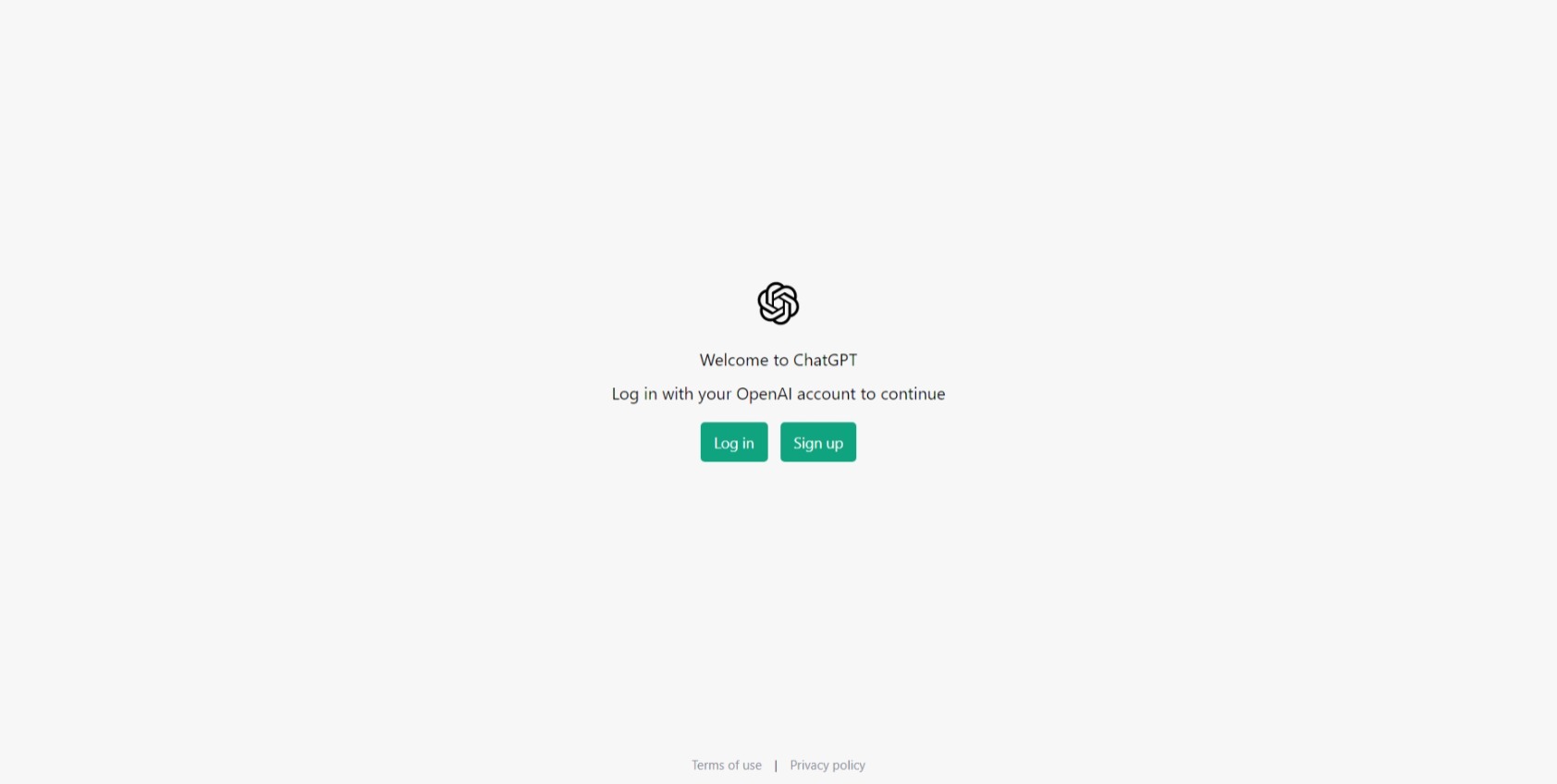
2). After logging in to the tool, enter your input into the chat window. This could be a question, request for assistance, or any other type of input.
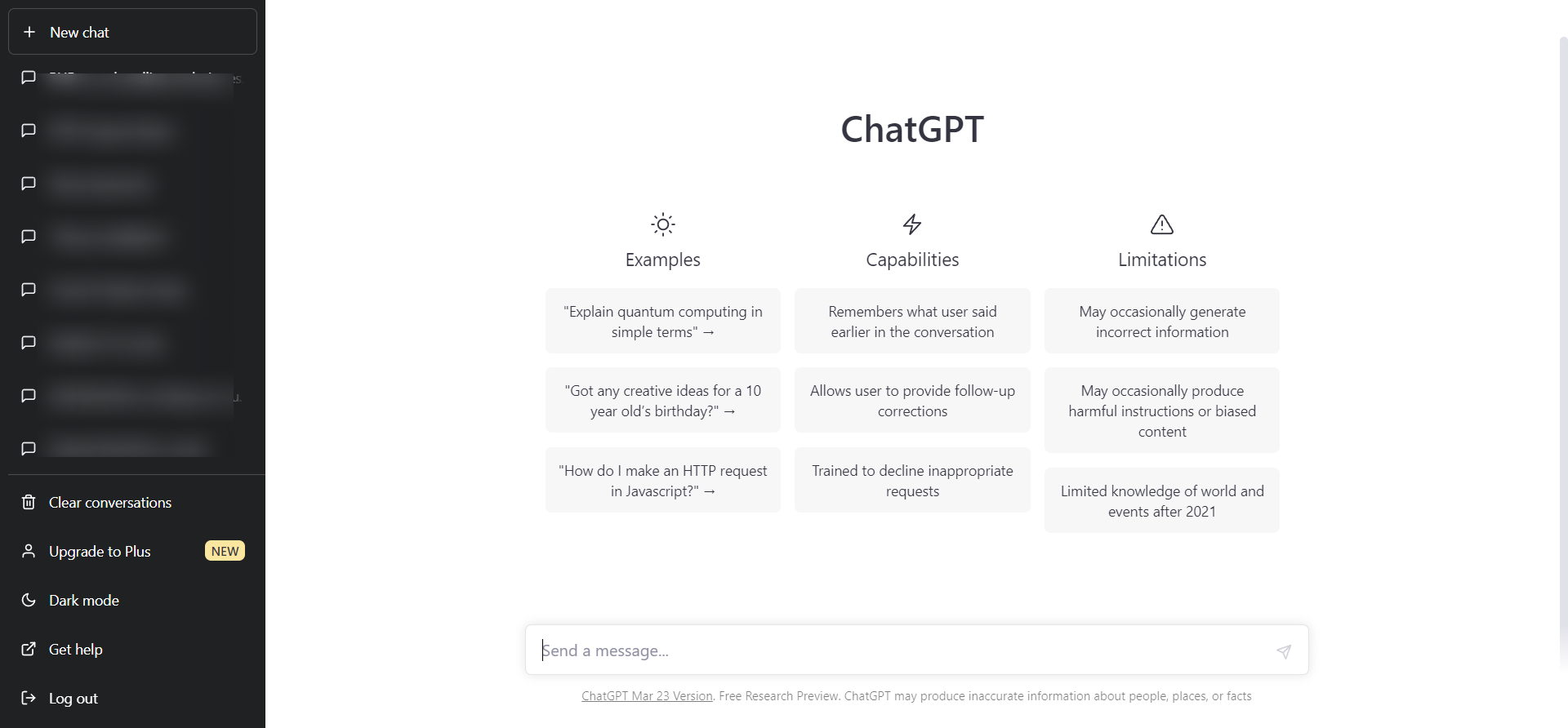
3). ChatGPT will analyze your input using natural language processing and machine learning, and generate a response. The response may be a text-based message or a spoken response, depending on how the tool has been implemented.
4). Based on the response from ChatGPT, you may have follow-up questions or may have received the information or assistance you needed. If you have additional questions or need further assistance, you can continue the conversation. Otherwise, you can end the conversation.
You can check out the below video for a guide
Overall, using ChatGPT is designed to be a user-friendly and intuitive process, with the tool using advanced technology to understand and respond to user inputs in a natural and efficient way.
Use Cases of ChatGPT
1. For Developers
- Code generation
- Debugging
- API integration help
- Documentation writing
2. Content Creation
- Blog writing
- SEO articles
- Social media posts
- Copywriting
3. Education
- Learning programming
- Solving math problems
- Research assistance
4. Business Automation
- Customer support bots
- Email automation
- Data analysis
5. SEO & Marketing
- Keyword research
- Meta descriptions
- Content optimization
Advantages and Disadvantages :
Advantages:
- Language fluency: It is trained on a massive corpus of texts, which enables it to generate human-like responses with a high degree of fluency and coherence.
- Large knowledge base: It has access to a vast amount of information on a wide range of topics, making it a useful tool for research and information retrieval.
- Versatility: It can be used for a variety of applications, including chatbots, text completion, and text summarization, among others.
- Continuous learning: It is designed to learn continuously from the data it encounters, which means that it can improve over time and become more accurate and effective.
Disadvantages:
- Lack of emotional intelligence: It lacks emotional intelligence and cannot detect the user’s emotional state, making it less adept at understanding and responding to nuanced emotional cues.
- Limited context: It can only generate responses based on the information it has been trained on and lacks the ability to understand broader contextual information.
- Bias: It may be biased towards certain groups or ideas based on the data it was trained on, leading to potential inaccuracies or perpetuation of stereotypes.
- Inability to understand images or videos: It is designed to process and generate text-based responses, so it is unable to understand visual information, such as images or videos.
References
- OpenAI Official Website: https://openai.com
- ChatGPT Product Page: https://chat.openai.com
- GPT-4 Overview: https://openai.com/research
Conclusion
ChatGPT has revolutionized the way humans interact with machines. From simple conversations to complex problem-solving, it has become an essential tool in modern digital workflows.
As AI continues to evolve, ChatGPT is expected to become even more powerful, intelligent, and deeply integrated into our daily lives. Whether you’re a developer, student, or business owner, leveraging ChatGPT in 2026 can significantly boost productivity and innovation.


